The Story
The initiative of Het Nieuwe Bouwcentrum has a compelling story. Its inspiration can be traced back to Rotterdam's historic Bouwcentrum, which was founded in the years following WWII, a time characterized by a sense of urgency and a spirit of innovation. In the 1990s, the Bouwcentrum was closed, its role filled by the newly established Het Nederlands Architectuurinstituut (NAI), which merged with the Nieuwe Instituut in 2013. The question at the core of the initiative remains unchanged: How can architecture in the Netherlands help address today’s most urgent challenges?
Data for Architecture and Society
Immediately after WWII, the Netherlands had a monumental task: rebuilding damaged and destroyed infrastructure and homes. The Bouwcentrum Rotterdam was established in 1947/48 as a statistical office tasked with documenting, supporting, and promoting the country-wide reconstruction efforts. It became a crucial institution that connected architects, urban planners, interior designers, the construction industry, and the public. They worked together, sharing knowledge and collaborating as they attempted to tackle this massive challenge.
Efficiency in data sorting: A woman utilizing a Hollerith sorting machine to process punch cards for statistical research // © Stadsarchief Rotterdam, Stichting Artsencentrum Rotterdam, 994/4121.
Data and statistical thinking formed the methodological basis of the Bouwcentrum. The institution’s founding director, Jan van Ettinger (1902-1981), an expert in statistics, had joined the Central Bureau of Statistics in 1939. Working alongside influential graphic designers, artists, and researchers like Gerd Arntz, Otto Neurath, Philip Idenburg, and Jan Tinbergen, he significant contributions and helped develop ISOTYPE (International System of Typographic Picture Education), a ground-breaking method for bringing statistical data to life through visuals.
Building a Knowledge Hub
The Bouwcentrum was a knowledge hub for the built environment. It operated as an information and documentation centre for architects, planners, and the public in the Netherlands. The Bouwcentrum had three main objectives: First, they wanted to provide “impartial information” to architecture and the construction industry, to become a reliable source of unbiased and accurate information that could inform design descisions. Second, Bouwcentrum wanted to serve as a bridge connecting academic theory and real-world praxis. Finally, the founders of the Bouwcentrum aimed to create a truly international system of cooperation.
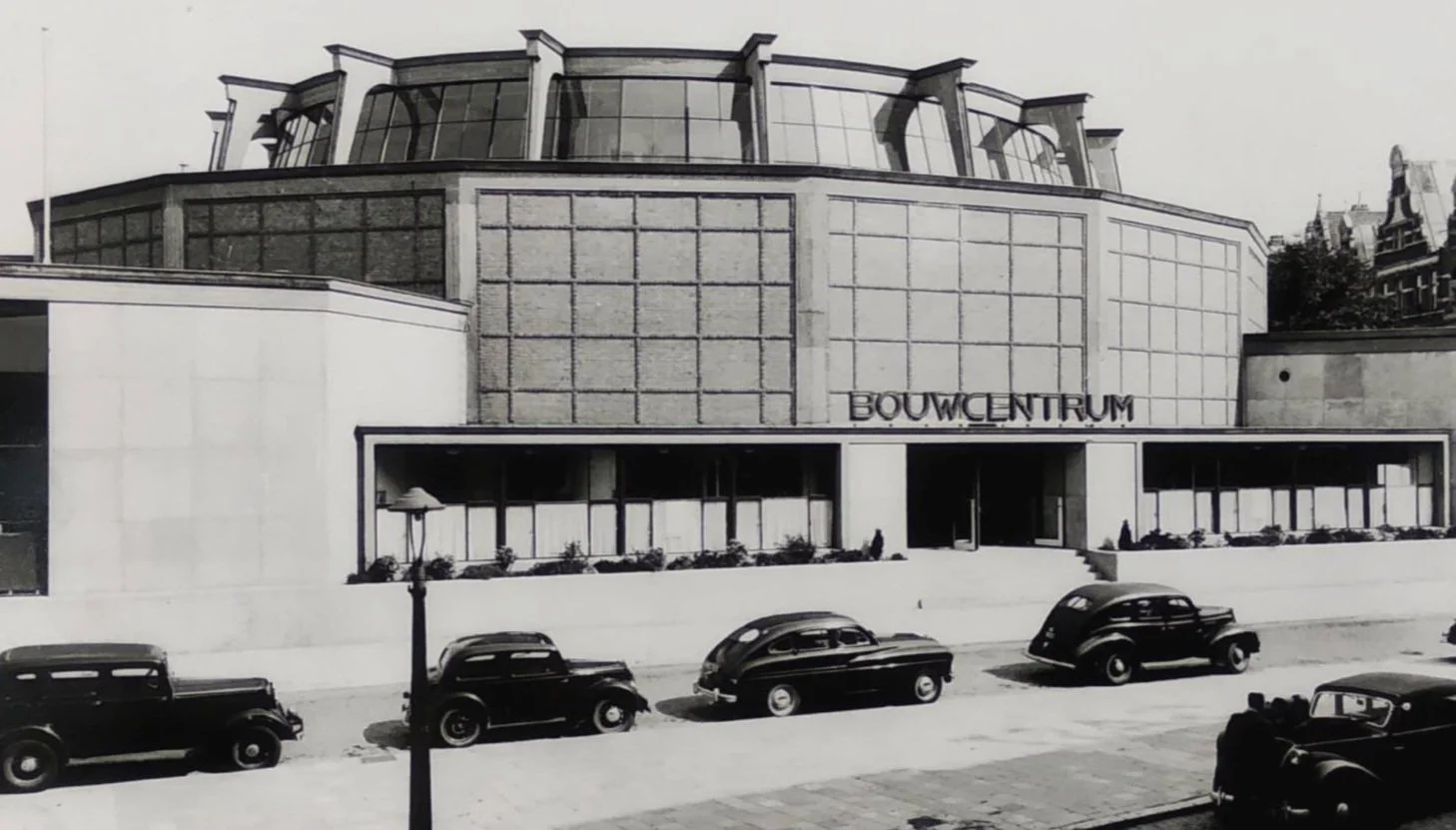
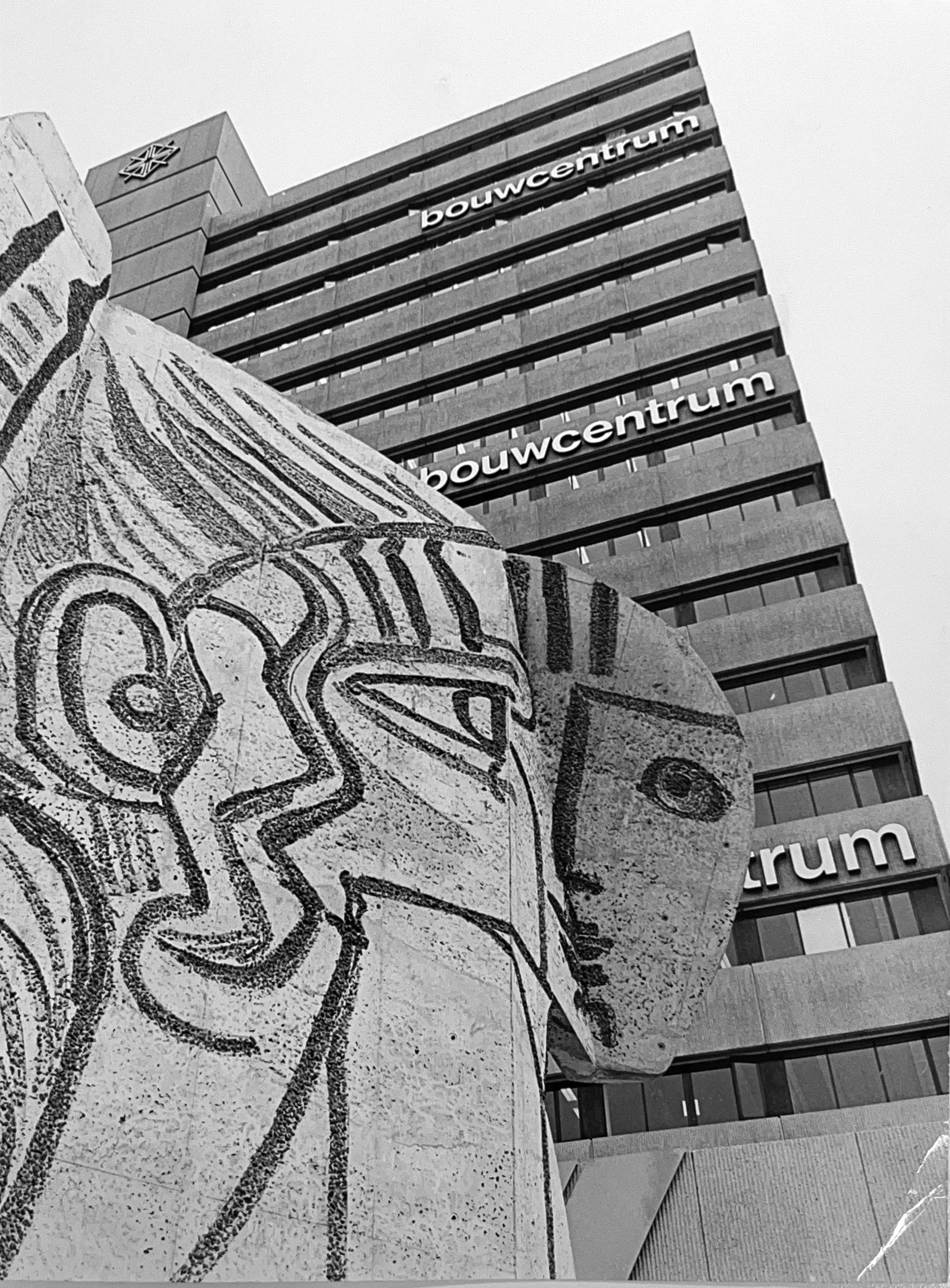
Creating a dynamic platform for architecture and society: Inauguration of the round exhibition building by Queen Juliana on 18 May 1949, designed by the architect Joost Willemsen Cornelis Boks © Photo: C. van Weele // second image: The Bouwcentrum tower as the third extension of the building ensemble, 1967-1970, designed by Bureau Boks Eijkelenboom Middelhoek // both images © J.W.C. BOKS Archive, National Collection for Dutch Architecture and Urban Planning, Nieuwe Instituute, Rotterdam.
Van Ettinger and his team understood the value of connecting with experts and organisations around the world. They wanted to ensure that knowledge and best practices could be shared so that advancements in one part of the world could spread quickly. They wanted to improve the built environment not just in the Netherlands, but everywhere. These three objectives—providing impartial information, bridging theory and practice, and promoting international cooperation—drove Bouwcentrum, guiding its initiatives and ensuring its lasting relevance. Their immense impact in the world of post-war architecture continues to reverberate in the twenty-first century.
Architecture Exhibitions
The Bouwcentrum organised and curated many architecture exhibitions and presentations for the public. These events provided an open platform for showcasing new design concepts, building technologies, and construction materials that could contribute to ongoing reconstruction and modernization efforts in the Netherlands. In addition to exhibitions on new housing typologies and infrastructure buildings, the Bouwcentrum foregrounded questions about prefab building elements, architectural systems, and individual materials, such as wood and glass. Bouwcentrum exhibitions helped highlight and address some of the Netherland’s most urgent questions about the built environment.
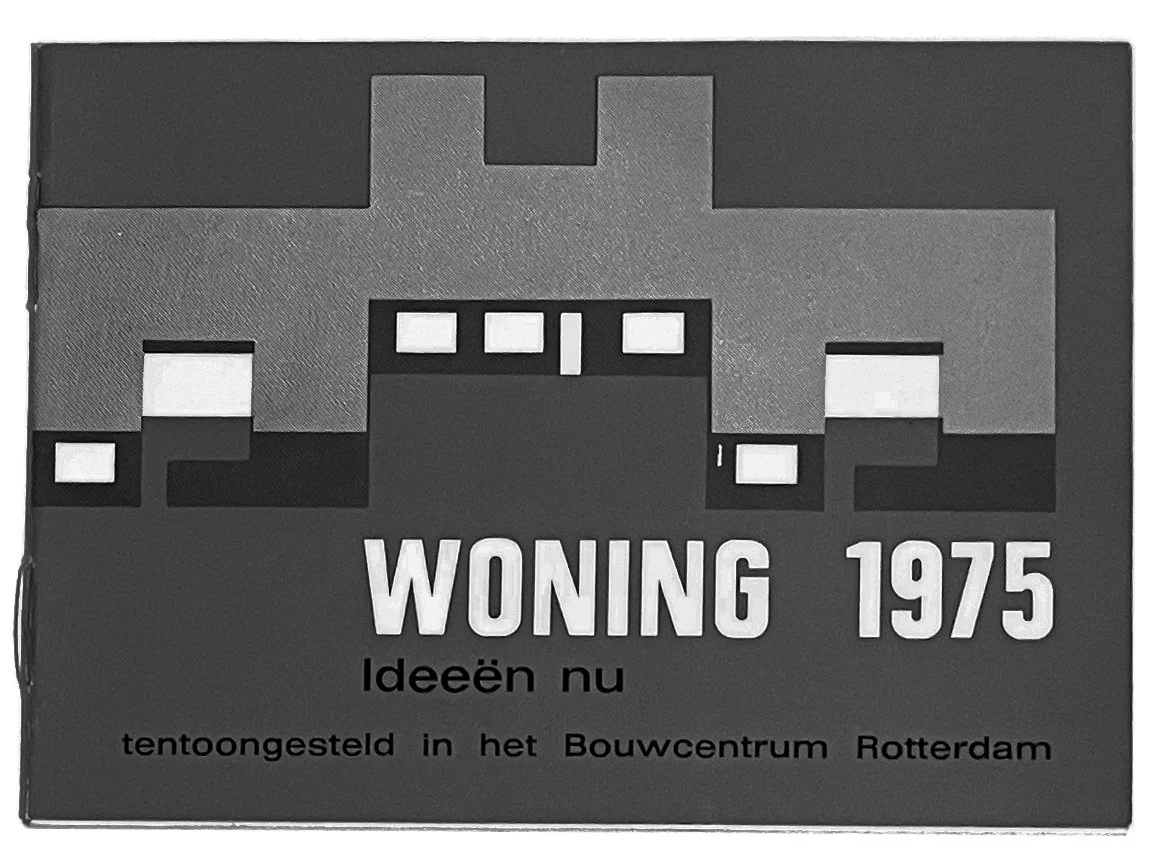
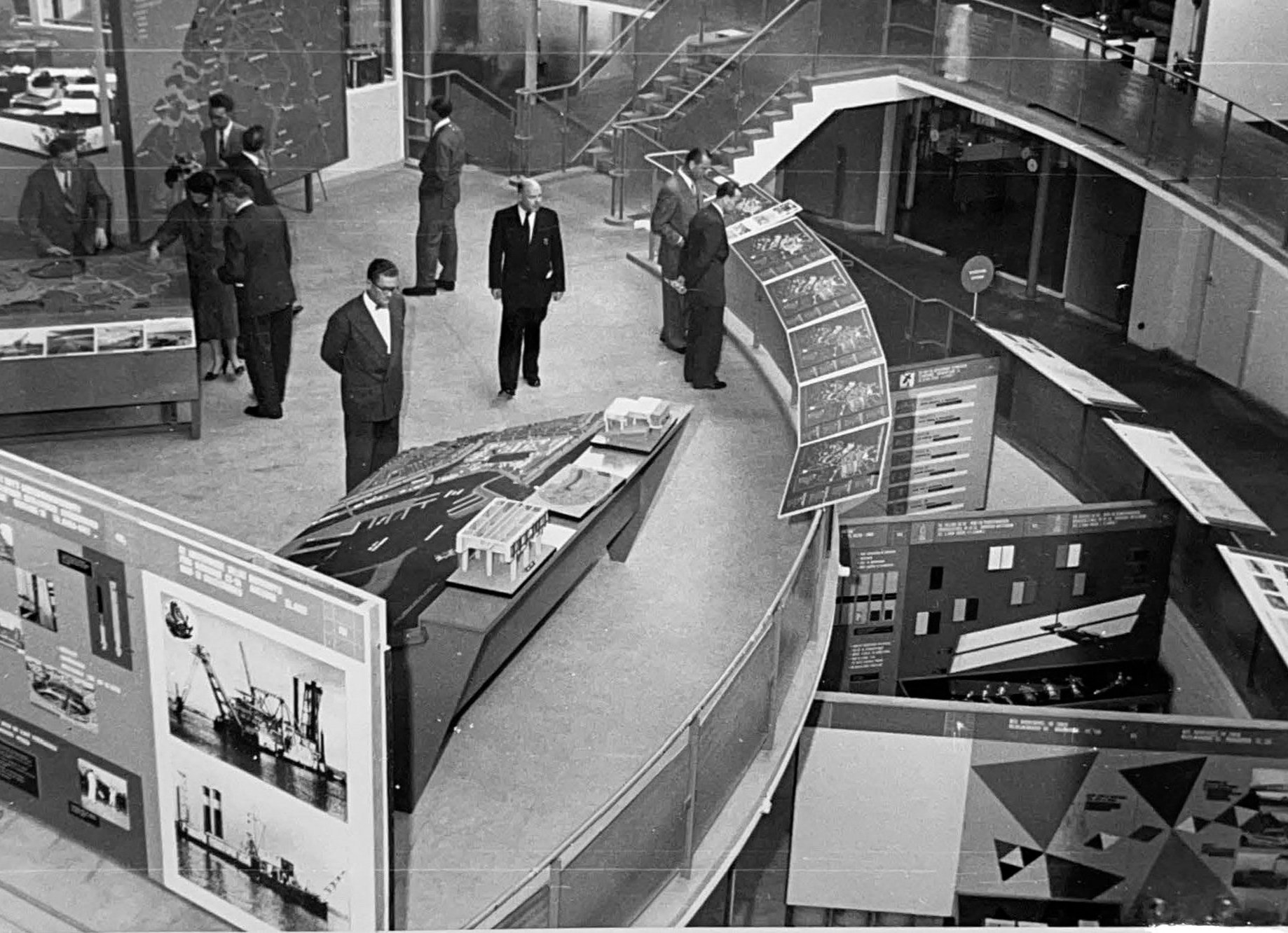
Displaying the future of the built environment: The cover of the exhibition catalogue "Woning 1975. Ideeen nu" showcasing new housing concepts, including a “house of the future”. The architectural design was a collaboration led by H. O. Eckardt and F. Bisen, along with the Prototype Department, 1965 © National Archive, Den Haag // Second image: A captivating view of the exhibition space within the iconic round Bouwcentrum building, circa 1960 © National Archive, Den Haag.
The first exhibitions were held in the mid-1950s and were devoted to, among other things, an international furniture show ("Internationale meubeltentoonstelling", 1955), international housing construction ("Internationale volkshuisvesting", 1955), the reconstruction of the city of Arhem ("Wederopbouw Arnhem", 1955), the new urban planning in Detroit ("Detroit to-day", 1956), and the work of Mies van der Rohe ("Afbeeldingen van werken van de Amerikaanse architect Mies van der Rohe", 1959) and English industrial photographer Maurice Broomfield ("Beauty in industry. Fotos van de Engelse industrie-fotograaf Maurice Broomfield", 1959).
Education and Research
In 1966, the department expanded with the addition of the International Course for Industrial Quality Instructors. Courses were held in English twice yearly in Rotterdam, attracting participants from nearly 80 countries. The courses aimed to provide comprehensive education and transfer knowledge to professionals, empowering them with the skills and expertise to address urgent housing and construction challenges in their respective countries.
In 1958, to meet the growing international demand for expertise in housing and construction, the Bouwcentrum established an international training department. The department introduced the International Course on Building (ICB) to educate international architects and planners. The five-month course included theoretical and practical components covering design, planning, programming, techniques, and organisational skills.
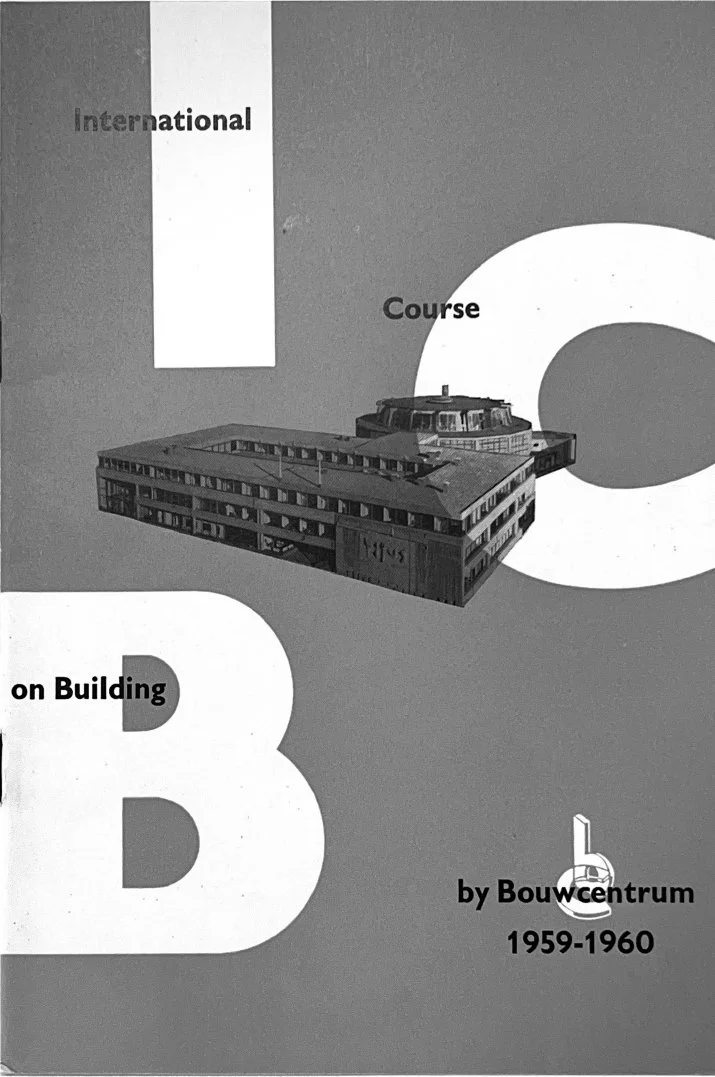
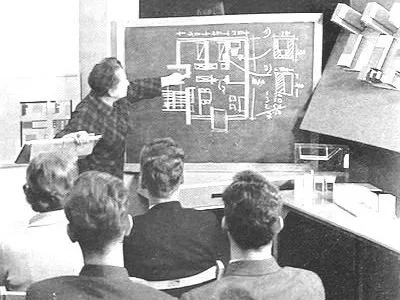
Educating the future architect: The cover of a brochure showcasing the “International Courses for Building” (ICB), 1959-1960, with the Bouwcentrum and its first extension designed by Boks © National Archive, Den Haag // Second picture: A glimpse into a classroom during an International Building Course © photo: Wanink H.
Urban Simulation
Founded in 1970, the Media Lab embarked on a ground-breaking mission to improve the built environment with the aid of innovative new media technologies. Drawing inspiration from the renowned Research Centre for Urban and Environmental Planning at Princeton University, the lab explored the potential of city models to unravel the intricate spatial dynamics of urban environments.

Urbanoscoope: An innovative control mechanism enabling the movement of a mini-periscope equipped with a television camera, 1971. This system allows for viewing larger-scale models at eye level. Captured images are displayed through a closed-circuit television system © BOUW no. 27/28, 30 June, 1971, S. 1074.